Most eye exams are straightforward, but the quality of the visit often depends on what you bring with you. When details are clear, your optometrist can quickly identify what changed and what to do next.
1. Track symptoms for 3 to 7 days
Write down when discomfort appears: after long screen sessions, while driving at night, or during reading. Include how long symptoms last and whether they improve with rest.
- Blur at near distance or far distance
- Dryness, burning, or watery eyes
- Headaches around the temples or brow
- Glare sensitivity, especially at night
2. Bring your current glasses and contacts
Pack every pair you use regularly, including computer glasses and sunglasses with prescription lenses. If you wear contact lenses, bring the brand name and power information.
3. List medications and health history updates
Some medications can affect tear production, focus, or eye pressure. Mention recent health changes such as diabetes, thyroid conditions, or autoimmune issues.
4. Prepare questions in advance
If you often leave appointments thinking “I forgot to ask,” create a note on your phone first. Useful questions include:
- Has my prescription changed significantly?
- Do I need separate lenses for screen work?
- Are my dryness symptoms likely environmental?
- How often should I schedule follow-up exams?
Urgent signs such as sudden vision loss, severe eye pain, flashes, or a curtain-like shadow require immediate medical care.
5. Use online checks between full exams
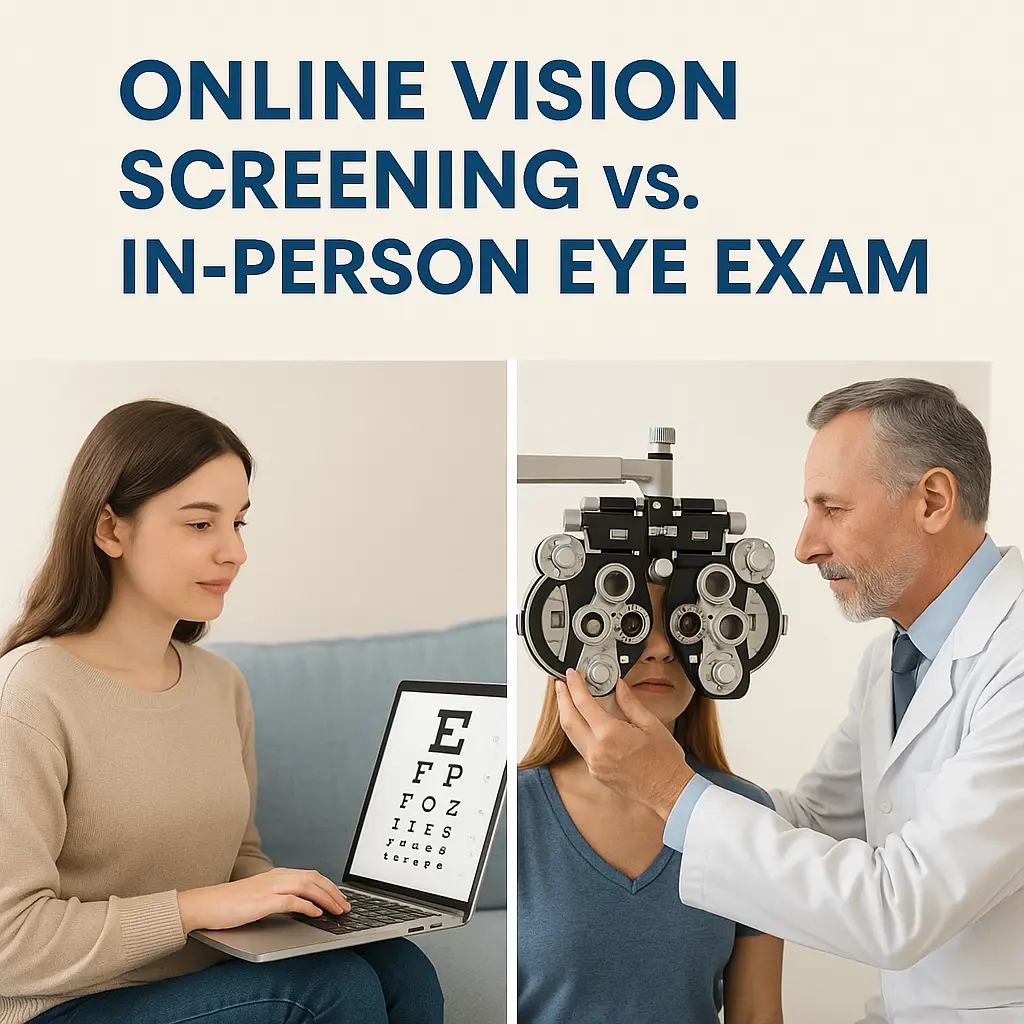
In-person exams remain essential, but quick online screening can help you notice trends sooner. You can monitor changes with a vision test and a contrast test between annual appointments.
Save this checklist before your next appointment, and keep your eyes on track with regular check-ins at EyeTest Online.